In short, similes for moon are creative comparisons that help you describe the moon in vivid, memorable ways using words like “as” or “like.” In this guide, you’ll find dozens of examples, writing tips, poem ideas, and fun activities that can make your descriptions shine brighter than ever.
What Are Similes for Moon? (And Why They Matter)
You know that moment when you’re writing a story and suddenly freeze because you can’t think of a good description? Maybe your teacher asked you to describe the night sky, but all you could write was “the moon was bright.” That happens to almost everyone.
Similes for moon are comparisons that describe the moon by saying it is “like” or “as” something else. They help readers picture the moon more clearly and feel the mood of your writing.
For example, instead of saying “the moon was bright,” you could write, “The moon glowed like a silver lantern.” That one small change makes your sentence feel more alive and interesting.
Language arts educators and literacy researchers often encourage students to use similes because they improve creativity, reading comprehension, and descriptive writing. When you practice using similes, your stories, poems, and essays become easier to imagine and more fun to read.
The good news is that you don’t need to sound like a famous poet to use them well. You just need a little imagination and the right examples to inspire you.
The Best Examples of Similes for Moon
[IMAGE: A glowing full moon over a quiet forest night sky]
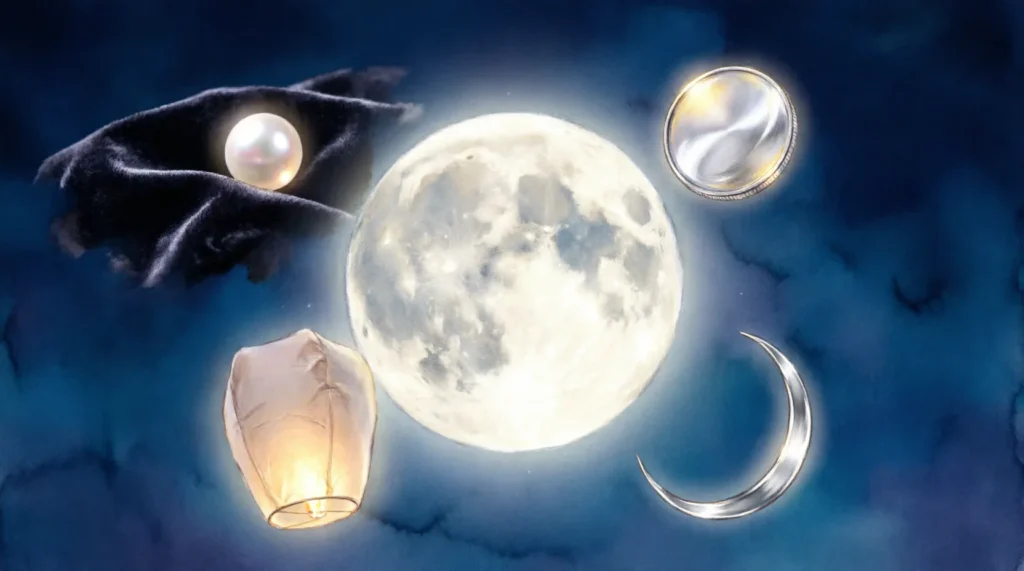
The moon shone like a silver coin in the sky.
The moon floated like a glowing balloon above the clouds.
The moon was as bright as a flashlight in the dark.
The moon hung like a pearl on black velvet.
The moon looked like a giant glowing cookie.
The moon drifted like a lonely boat across the night sky.
The moon was as pale as fresh snow.
The moon glimmered like a polished mirror.
The moon rose like a golden lantern over the hills.
The moon was as round as a marble.
The moon glowed like a candle in a dark room.
The moon looked like a watchful eye in the sky.
The moon shimmered like ice under sunlight.
The moon floated like a feather in deep space.
The moon was as calm as a sleeping baby.
The moon sparkled like a jewel above the ocean.
The moon looked like a slice of lemon in the sky.
The moon was as soft as a pearl’s glow.
The moon hovered like a magical orb over the trees.
The moon gleamed like silver paint brushed across the heavens.
The moon appeared like a spotlight over the town.
The moon was as silent as a secret.
The moon glowed like a nightlight for the world.
The moon drifted like a ghost through the clouds.
The moon was as mysterious as an unopened letter.
The moon shined like a diamond in black cloth.
The moon rested like a crown above the mountains.
The moon looked like a giant marshmallow floating in the dark.
The moon was as smooth as polished stone.
The moon sparkled like glitter on dark paper.
The moon floated like a paper lantern in the wind.
The moon looked like a pale pumpkin in October.
The moon shone like a beacon for travelers.
The moon was as cold as ice water.
The moon drifted like a dream across the sky.
The moon glowed like molten silver.
The moon looked like a pearl button sewn onto the night.
The moon was as gentle as a whispered song.
The moon hung like a chandelier above the earth.
The moon glimmered like treasure hidden in darkness.
The moon was as lonely as a single bird in winter.
The moon floated like a white sail across the stars.
The moon shined like a polished shield.
The moon was as magical as a fairy tale.
The moon glowed like a sleepy lantern at midnight.
The moon drifted like smoke across the heavens.
The moon looked like a bright plate in the sky.
The moon was as peaceful as a quiet lake.
The moon sparkled like frost on a winter morning.
The moon hung like a glowing clock above the city.
The moon shone like a pearl floating on ink.
The moon looked like a silver apple in the sky.
The moon was as bright as hope in darkness.
The moon floated like a floating candle on water.
The moon glimmered like magic dust in the night.
These examples work well because they create strong imagery. You can almost see the moon glowing, floating, or shining in your mind.
Good similes also connect emotions to descriptions. Some feel peaceful, some funny, and some mysterious. That emotional connection is what makes readers remember your writing.
How to Use Similes for Moon in Your Writing
Once you’ve seen great examples, the next step is learning how to create your own. You don’t need complicated words to make your writing powerful.
Think about what the moon looks like.
Is it bright, round, pale, golden, or mysterious? Focus on one clear feature before creating your comparison.
Compare it to something familiar.
Readers connect more easily when you compare the moon to objects they already know. A lantern, pearl, coin, or flashlight are easy to picture.
Match the mood of your story.
If your story feels spooky, use darker comparisons. If it feels peaceful, choose softer images.
Example: “The moon floated like a ghost through the foggy sky.”
Keep your similes simple and natural.
Some students try too hard to sound fancy. Usually, the clearest similes are the strongest ones.
Example sentence: “Layla watched the moon glow like a silver lamp above the desert.”
As you practice, you’ll notice that similes become easier and more natural to write.
Similes for Moon in Poems and Stories
[IMAGE: A student writing poetry under moonlight]
Poets and authors often use similes for moon to create emotion, rhythm, and atmosphere. A single moon simile can make a poem feel dreamy, lonely, magical, or calm.
Here are a few short fictional examples you can learn from.
Aarav stood by the window quietly.
“The moon hung like a lantern above the sleepy town, spilling silver light across the empty streets.”
Mina opened her notebook and wrote:
“The moon drifted like a paper boat, sailing softly through an ocean of stars.”
Carlos whispered during the camping trip:
“The moon glowed like a giant pearl, watching over the forest all night long.”
These examples feel vivid because they help you picture the scene clearly. Creative writing teachers often encourage students to use moon similes because nighttime settings already carry strong emotions and imagery.
You can use these ideas in poems, fantasy stories, personal narratives, or even school assignments about nature.
More similes for moon by Tone and Context
🌿 Natural & Descriptive “Like a pearl resting on dark velvet” — This captures the moon’s bright beauty against the night sky and works well in descriptive essays. “As calm as the moon above a quiet lake” — Use this to show peacefulness and stillness in nature writing. “Like a lantern hanging over the hills” — This highlights the moon’s gentle glow and fits vivid outdoor scenes. “As steady as the moon in the midnight sky” — It suggests reliability and timelessness in descriptions. “Like a silver leaf floating in the darkness” — This creates a delicate image for essays and creative pieces.
💛 Warm & Emotional “Like a comforting smile in the night” — This expresses warmth and reassurance in personal writing. “As gentle as the moon watching over sleeping towns” — Use this to create a caring and peaceful feeling. “Like a quiet friend beside me” — This simile works well when describing feelings of companionship. “As soothing as the moonlight after a long day” — It captures calm emotions and relaxation. “Like a soft blanket spread across the sky” — This conveys safety and comfort in heartfelt stories.
✨ Poetic & Romantic “Like a shining promise above the world” — This adds hope and beauty to poems and love writing. “As graceful as the moon dancing with the stars” — Use this to create elegant and dreamy imagery. “Like a secret jewel hidden in the heavens” — This simile gives the moon a mysterious and romantic quality. “As lovely as the moon reflected in still water” — It creates a peaceful and poetic mood. “Like a whispered wish carried through the night” — This works beautifully in lyrics and emotional poems.
😄 Playful & Fun “Like a giant cookie hanging in the sky” — This humorous image is perfect for casual writing and jokes. “As round as the moon in a cartoon drawing” — Use this when describing something cheerful and amusing. “Like a flashlight for sleepy stars” — This playful simile creates a fun picture for young readers. “As bright as the moon during a late-night adventure” — It adds excitement to stories and captions. “Like a glowing button sewn onto the sky” — This quirky comparison makes writing feel lively and creative.
These tone-grouped similes for moon give you options for every kind of writing — whether you need something soft and poetic or bold and fun. Try picking one from each group and using them in a short paragraph to see how different the same keyword can feel.
Using similes for moon in Real Writing Contexts
In a Descriptive Essay Students often describe the moon when writing about nature, seasons, or nighttime scenes. Adding a simile helps readers picture the sky more clearly and makes descriptions more vivid. For example, The moon hung above the trees like a lantern hanging over the hills, casting a soft glow across the field.
In a Poem Similes for moon can create peaceful, dreamy, or romantic moods in poetry. They help readers feel the atmosphere instead of simply seeing it. The moon was like a whispered wish carried through the night, and the stars answered with silent light.
In a Story or Creative Scene Writers can use similes for moon to describe settings and emotions during important moments. A creative comparison makes scenes more memorable and expressive. As Mia stepped onto the quiet beach, the moon shimmered above the waves like a secret jewel hidden in the heavens, filling her with wonder.
In a Social Media Caption or Message Short similes are great for casual messages and captions because they add personality without using many words. They can make even simple posts feel creative and fun. Tonight’s moon looks like a giant cookie hanging in the sky—too pretty not to share! 🌙✨
The more you practice placing similes for moon into real sentences, the more natural your writing will sound — and the more your reader will feel exactly what you want them to feel.
Common Mistakes Students Make With Similes for Moon
Everyone makes mistakes while learning figurative language. The important thing is noticing them and improving little by little.
Using comparisons that don’t make sense
If your simile confuses readers, it loses its effect. Saying “the moon was like a sandwich” might sound random unless your story explains it creatively.
Overusing the same simile repeatedly
Many students write “the moon was like a silver coin” again and again. Try different comparisons to keep your writing fresh.
Making similes too long
A simile should usually be quick and clear. Long comparisons can interrupt the flow of your sentence.
Forgetting the mood of the scene
A funny simile may not fit a serious or emotional moment. Think about how your moon description should make readers feel.
Confusing similes with metaphors
A simile uses “like” or “as.” If you remove those words, you may accidentally create a metaphor instead.
These mistakes are completely normal. Even experienced writers revise their descriptions to make them stronger.
Fun Activities to Practice Similes for Moon
Learning figurative language becomes much easier when you turn it into a game or creative challenge.
Moon Drawing Challenge
Grab a pencil and draw different moon phases. Then write one simile beside each drawing to match the mood of the picture.
Simile Match Game
Write moon similes on one set of cards and emotions on another. Try matching peaceful, spooky, funny, or magical similes together.
Night Sky Story Starter
Create a short story beginning with this sentence: “The moon glowed like ________ above the town.”
Challenge yourself to finish the story in one page.
Read and Hunt Activity
Read a poem or story that includes the moon. Circle any similes you find and discuss why the author used them.
Create Your Own Moon Simile Worksheet
Fold a paper into four sections labeled bright, spooky, funny, and peaceful. Write at least three moon similes in each box.
Group Poetry Circle
Sit with friends or classmates and build a moon poem together. Each person adds one line using a different simile.
These activities help you practice creativity without feeling stressed or bored.
What NOT to Do With Similes for Moon
Sometimes students hear advice online that sounds helpful but actually makes writing weaker. Here are a few myths worth avoiding.
Don’t force a simile into every sentence
Too many comparisons can make your writing feel crowded. Use similes where they matter most.
Don’t copy famous similes word for word every time
Classic comparisons are useful, but your own ideas make your writing unique.
Don’t assume moon similes must sound serious
Funny or playful moon similes can work beautifully too, especially in children’s stories or creative assignments.
Don’t make every moon description identical
The moon can feel peaceful, spooky, lonely, magical, or exciting depending on your story. Variety keeps your writing interesting.
Understanding what to avoid helps you become a more confident and thoughtful writer.
Frequently Asked Questions About Similes for Moon
What is a simile for moon?
A simile for moon is a comparison that describes the moon using “like” or “as.” For example, “The moon shone like a silver coin” compares the moon’s appearance to something familiar and visual.
How do you use similes for moon in a sentence?
You can use them to make your descriptions more vivid and emotional. For example: “The moon floated like a glowing lantern above the quiet lake.” This helps readers picture the scene more clearly.
What is the difference between a moon simile and a moon metaphor?
A simile uses “like” or “as,” while a metaphor compares directly without those words. “The moon was like a pearl” is a simile, but “The moon was a pearl” is a metaphor.
Why do writers use similes for moon?
Writers use them to create stronger imagery and mood. Moon similes can make scenes feel magical, calm, lonely, romantic, or mysterious depending on the comparison.
Are similes for moon good for school writing?
Yes, they are excellent for school assignments, poems, stories, and descriptive paragraphs. Many literacy educators encourage students to use similes because they improve creativity and make writing more engaging.
Final Thoughts on Similes for Moon
Learning similes for moon can completely change the way your writing sounds and feels. Instead of simple descriptions, you can create scenes that readers truly imagine in their minds.
You explored dozens of moon similes, learned how to use them naturally, and discovered activities that make practice more enjoyable. You also saw how poets and storytellers use moon imagery to create emotion and atmosphere.
The best part is that you do not need perfect writing skills to begin. Every strong writer starts by experimenting, making mistakes, and trying new ideas one sentence at a time.
So the next time you look up at the night sky, challenge yourself to describe the moon in a fresh way. Your imagination is already brighter than you think.
{
“@context”: “https://schema.org”,
“@type”: “FAQPage”,
“mainEntity”: [
{
“@type”: “Question”,
“name”: “What are similes for moon and why are they important?”,
“acceptedAnswer”: {
“@type”: “Answer”,
“text”: “Similes for moon are creative comparisons that use words like ‘as’ or ‘like’ to describe the moon in vivid ways. They help readers visualize the moon more clearly and enhance the mood of your writing, making it more engaging.”
}
},
{
“@type”: “Question”,
“name”: “Can you provide an example of a simile for the moon?”,
“acceptedAnswer”: {
“@type”: “Answer”,
“text”: “Certainly! One example of a simile for the moon is, ‘The moon glowed like a silver lantern.’ This comparison makes the description more vivid and interesting than simply stating that the moon is bright.”
}
},
{
“@type”: “Question”,
“name”: “How can similes improve my writing?”,
“acceptedAnswer”: {
“@type”: “Answer”,
“text”: “Using similes can boost creativity, improve reading comprehension, and enhance descriptive writing. By incorporating similes into your stories, poems, and essays, you can create more vivid imagery that captivates your readers.”
}
},
{
“@type”: “Question”,
“name”: “What tips do you have for using similes effectively?”,
“acceptedAnswer”: {
“@type”: “Answer”,
“text”: “To use similes effectively, focus on creating comparisons that resonate with your audience. Experiment with different adjectives and nouns to find unique ways to describe the moon, and don’t hesitate to let your imagination guide you.”
}
},
{
“@type”: “Question”,
“name”: “Are there activities to help practice using similes for moon?”,
“acceptedAnswer”: {
“@type”: “Answer”,
“text”: “Yes! The article includes fun activities that encourage creativity and exploration of similes. You can write your own similes, illustrate them, or use them in short poems to practice and enhance your descriptive skills.”
}
},
{
“@type”: “Question”,
“name”: “What writing genres benefit from using similes for moon?”,
“acceptedAnswer”: {
“@type”: “Answer”,
“text”: “Similes for moon can enhance various writing genres, including poetry, fiction, and descriptive essays. They add depth and imagery that can evoke emotions and create a more immersive experience for readers.”
}
},
{
“@type”: “Question”,
“name”: “Do I need to be a poet to use similes effectively?”,
“acceptedAnswer”: {
“@type”: “Answer”,
“text”: “No, you don’t need to be a poet to use similes well. With a little imagination and the right examples, anyone can incorporate similes into their writing to make it more vibrant and engaging.”
}
}
]
}
.ch-faq-block{margin:2em 0}.ch-faq-block h3{font-size:1.3em;font-weight:700;margin:0 0 14px}.ch-faq-item{border:1px solid #e5e7eb;border-radius:10px;margin-bottom:8px;overflow:hidden}.ch-faq-item summary{list-style:none;display:flex;justify-content:space-between;align-items:center;gap:12px;padding:14px 18px;background:#f9fafb;cursor:pointer;font-weight:600;-webkit-user-select:none;user-select:none}.ch-faq-item summary::-webkit-details-marker{display:none}.ch-faq-item summary::marker{display:none}.ch-faq-item summary:hover{background:#f3f4f6}.ch-faq-arrow{font-size:11px;flex-shrink:0;color:#6b7280;transition:transform .2s ease}.ch-faq-item[open] .ch-faq-arrow{transform:rotate(180deg)}.ch-faq-answer{padding:14px 18px;border-top:1px solid #e5e7eb;margin:0}.ch-faq-answer p{margin:0}
Frequently Asked Questions
What are similes for moon and why are they important?▼
Similes for moon are creative comparisons that use words like ‘as’ or ‘like’ to describe the moon in vivid ways. They help readers visualize the moon more clearly and enhance the mood of your writing, making it more engaging.
Can you provide an example of a simile for the moon?▼
Certainly! One example of a simile for the moon is, ‘The moon glowed like a silver lantern.’ This comparison makes the description more vivid and interesting than simply stating that the moon is bright.
How can similes improve my writing?▼
Using similes can boost creativity, improve reading comprehension, and enhance descriptive writing. By incorporating similes into your stories, poems, and essays, you can create more vivid imagery that captivates your readers.
What tips do you have for using similes effectively?▼
To use similes effectively, focus on creating comparisons that resonate with your audience. Experiment with different adjectives and nouns to find unique ways to describe the moon, and don’t hesitate to let your imagination guide you.
Are there activities to help practice using similes for moon?▼
Yes! The article includes fun activities that encourage creativity and exploration of similes. You can write your own similes, illustrate them, or use them in short poems to practice and enhance your descriptive skills.
What writing genres benefit from using similes for moon?▼
Similes for moon can enhance various writing genres, including poetry, fiction, and descriptive essays. They add depth and imagery that can evoke emotions and create a more immersive experience for readers.
Do I need to be a poet to use similes effectively?▼
No, you don’t need to be a poet to use similes well. With a little imagination and the right examples, anyone can incorporate similes into their writing to make it more vibrant and engaging.
Devon O’Reilly is a seasoned pun artisan with a diverse background in Communications and Graphic Design. He discovered his knack for puns while working in the advertising industry, where he often used humor to engage audiences. Devon is particularly adept at creating versatile puns that are effortlessly adaptable for any platform, from business presentations to social media campaigns. At PunBites, he merges his design skills and wordplay expertise to produce visually appealing and textually intriguing content, making it easy for users to spread cheer and humor with just a click.